
1.2V 3000mAh AA Rechargeable Battery 2pcs (BA0257) Products
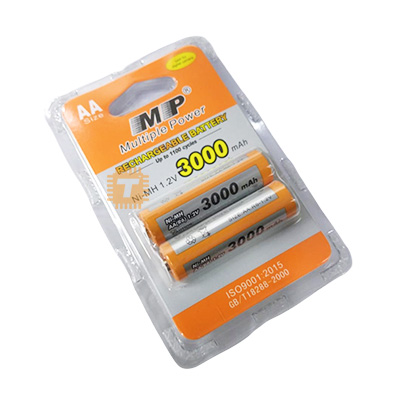
| Name | 1.2V 3000mAh AA Rechargeable Battery 2pcs |
| Code | BA0257 |
| Price | Rs.1,050.00 |
| In Stock | Yes |
| Package | BATTERY |
Product Details
This 2-piece pack of AA rechargeable batteries utilizes Nickel-Metal Hydride (NiMH) chemistry to provide a stable, long-lasting power source for everyday high-drain and low-drain household electronics. Designed to replace standard single-use 1.5V alkaline batteries, these cells can be recharged hundreds of times, making them both an economical and environmentally friendly choice.
Specifications
- Size: AA (Standard cylindrical HR6)
- Chemistry: Nickel-Metal Hydride (NiMH)
- Nominal Voltage: 1.2V (Fully compatible with devices designed for 1.5V alkaline batteries)
- Fully Charged Voltage: Approx 1.4V - 1.45V
- Discharge Cut-off Voltage: 1.0V
- Pack Quantity: 2 pieces
Features
- Flat Discharge Curve: Unlike alkaline batteries whose voltage drops continuously from 1.5V down to 0.9V during use, NiMH cells maintain a steady 1.2V plateau for roughly 80% of their discharge cycle. This ensures consistent device performance until the battery is nearly empty.
- Eco-Friendly Economics: A single pair of NiMH cells can replace hundreds of single-use disposable batteries over their operational lifespan, drastically reducing chemical landfill waste.
- No Memory Effect: Modern NiMH formulations do not suffer from the severe "memory effect" seen in older Nickel-Cadmium (NiCd) tech. You can top them off or recharge them at any state of charge without reducing their capacity.
- Low-Temperature Resilience: Performs significantly better in cold weather conditions (0℃ and below) compared to standard alkaline batteries, which rapidly lose power when frozen.
Understanding the Voltage Difference (1.5V vs 1.2V)
A common point of confusion is whether a 1.2V rechargeable battery can replace a 1.5V disposable alkaline battery.
- Alkaline (1.5V): Starts at 1.5V but quickly drops to around 1.2V under a normal load, continuing a steady downward slide until the device cuts off (usually around 1.0V to 1.1V).
- NiMH (1.2V): Starts around 1.4V fresh off the charger, quickly settles at a stable 1.2V, and holds that exact voltage for nearly the entire run time. Because of this stable plateau, almost all modern electronics accept them perfectly without any loss in functionality.
Common Applications
- High-Drain Electronics: Digital cameras, hand-held gaming consoles, RC toy cars, and motorized personal care items.
- Household Essentials: Wireless computer mice, keyboards, game controllers (e.g., Xbox controllers), and battery-powered clocks.
- Outdoor Tools: Tactical LED flashlights, headlamps, and walkie-talkies.
Usage & Maintenance Tips
- Compatible Charger Needed: Always use a dedicated NiMH smart charger. Never attempt to charge these cells in a lithium-ion charger (which outputs 4.2V) or an old-fashioned "dumb" timer-based charger that can easily bake and ruin the cells via overcharging.
- Initial Conditioning: Brand new NiMH batteries often require 3 to 5 full charge-and-discharge cycles to break in the chemistry and reach their maximum operating capacity.
- Storage Advice: If you plan to store the batteries unused for several months, charge them up to roughly 50% - 80% first. Storing NiMH cells completely dead can permanently degrade the chemistry, making them difficult or impossible to revive.
- Check for Self-Discharge: Standard NiMH batteries lose a tiny percentage of their charge every day just sitting on a shelf. If you notice they are dead after sitting in a drawer for a few months, simply pop them back into your smart charger to refresh them before use.
Important Capacity Notice:
These budget-tier cells are frequently labeled or marketed with a capacity of 3000mAh. It is important to note that the absolute physical limit for a high-end, top-tier AA NiMH cell (such as Panasonic Eneloop Pro) tops out around 2500mAh to 2700mAh. Labels stating 3000mAh or higher on an AA cell are mathematically exaggerated. Under real-world testing conditions, the actual capacity of these cells typically ranges between 800mAh and 1800mAh. They will still perform exceptionally well in daily electronics, but expectations should be aligned with genuine NiMH physics.
Sharing is caring, show love and share the product with your friends.
Featured
Add to Cart
Add to Cart
Other Products
Add to Cart
Add to Cart
